
Virtual Fitting Rooms Evolve from Gimmick to Industry Standard
For years, the fashion world sought a technological savior to solve the "wrong size and returns" conundrum, the biggest nightmare of e-commerce. And the moment has arrived! The "The Digital Mirror – Re-writing the Rules of Fit in Europe" panel, held during Copenhagen Fashion Week (CPHFW AW26) and moderated by Vogue Business Technology Editor Amy O'Brien, heralded a revolution set to reshape the fashion industry. E-commerce giant Zalando and denim legend Levi's are transforming our digital wardrobes into reality with AI-powered virtual try-on technology. Virtual fitting rooms are no longer just a fun marketing gimmick; they are now an efficient sales engine at the very heart of e-commerce.
Why Now? Why Did Past Virtual Fitting Rooms Fail?
Pelin Anlı Bedirhanoğlu, Director of Product Management at Zalando, clearly explained why technology had been insufficient until now during her panel speech: "When you think about the size problem, there are billions of different human bodies, and no two are exactly alike. Moreover, these bodies are constantly changing. On the other hand, there are billions of garments with different cuts and forms. In the digital world, we are trying to perfectly match these two variables."
Sitemizde En Çok Tercih Edilenler
-
 -%24
-%24Women's High-Waist, Ribbed, Shaping Interlock Knitted Leggings with E...
₺ 699.00TL₺ 529.90TL -
 -%10
-%10Fleece-lined, ELASTICATED, brushed, Ribbed, Shaping Interlock Winter ...
₺ 749.00TL₺ 669.90TL -
 -%9
-%9None Denim Side Cargo Pocket Stretchy Fabric Men's Cargo Shorts Bermuda
₺ 999.00TL₺ 899.90TL -
 -%10
-%10Buckle Detailed Loose Cut Wide Leg Comfortable Baggy Jeans Loose Wome...
₺ 1,290.00TL₺ 1,159.90TL -
 -%10
-%10Relaxed Fit Comfortable Jean Coat Loose Women's Knee-Length Shorts @T...
₺ 990.00TL₺ 889.90TL -
 -%10
-%10Extra Flexible Women's Leggings with Karyoka Stitching Detail, Sporty...
₺ 890.00TL₺ 799.90TL -
 -%10
-%10Adjustable Hem, Partially Elasticated Waist, Relaxed Fit, Stretch Gab...
₺ 1,290.00TL₺ 1,159.90TL -
 -%25
-%25Normal Waist Short Denim Cotton Lyocell women's Jeans @Balica2
₺ 1,299.00TL₺ 969.90TL -
 -%9
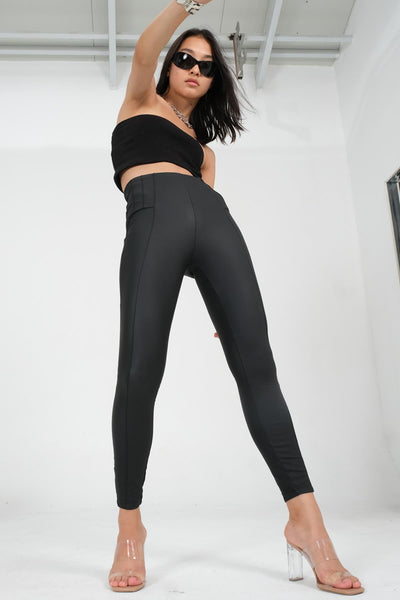
-%9High Waist, Slimming, Firming Rib Detailed Faux Leather Women's Leggi...
₺ 799.00TL₺ 719.90TL -
 -%10
-%10100% Cotton Muslin Fabric Comfortable Cut Drawstring Elasticated Pock...
₺ 899.90TL₺ 809.90TL


Older generation virtual try-on tools made predictions based on static images and simple height-weight calculations. However, as of 2026, artificial intelligence and machine learning have moved beyond static visuals to dynamic and 3D-based body modeling. This technological journey, which began with Zalando's acquisition of Swiss mobile body scanning startup Fision, has today evolved into a flawless ecosystem where millions of users can create 3D avatars with their actual body measurements.
Levi's and Zalando Collaboration: 40% Reduction in Denim Returns
Denim is one of the riskiest categories for online shopping. A pair of trousers has dozens of different parameters, such as waist, hips, leg length, and fabric stretch. Leona De Graft, VP of E-commerce at Levi's, shared the groundbreaking results of their pilot studies with Zalando. Thanks to the developed AI-based 3D body matching technology, a shocking 40% reduction in return rates was achieved, especially in the denim category.
This success stems from consumers no longer just seeing the garment on a model, but being able to see, to the millimeter, how the fabric drapes, where it might gather, and how the waist sits directly on their own digital twins (avatars). The technology has also been actively rolled out for Levi's outerwear products such as jackets, shirts, and t-shirts in 14 different European countries.

Body Image and Psychological Comfort: Making Peace with Our Digital Twin
One of the most striking aspects of the panel was highlighted by Dr. Helena Lewis-Smith, a body image expert and psychologist. Virtual try-on technologies were previously criticized for imposing unrealistic body standards. However, the new generation of 3D avatars offered by Zalando and Levi's reflect individuals' actual measurements, creating a sense of psychological confidence during shopping.
- Accurate Representation: Users see 3D models that are closest to their own body shapes, rather than standard mannequins, avoiding disappointment.
- Shopping Confidence: The ability to freely try on clothes in a digital environment without body anxiety increases customer loyalty and conversion rates.
- Sustainable Approach: Choosing the right size reduces unnecessary shipping traffic and thus the carbon footprint, directly contributing to sustainable fashion.
2026 Fashion E-commerce Report: What Awaits Us in the Future?
Zalando is not content with just virtual fitting rooms; it is also launching a ChatGPT-powered localized AI assistant in 25 different markets. For example, if you ask the system, "What should I wear to a birthday party in Barcelona in November?", the AI analyzes the weather, location, and your personal style to suggest the most suitable Levi's jeans combination and allows you to try on these combinations instantly on your 3D avatar.

In conclusion, 2026 proves that the digital revolution in e-commerce is not just about window dressing, but has evolved into a massive business model that increases operational efficiency and perfects the customer experience. This technology, which we at Domoda editors are closely following, suggests that our physical hangers in our wardrobes will soon be replaced entirely by digital codes.
