
Single jersey, the most basic and common knitted fabric in the textile world, is a much deeper subject than it appears. Many technical details, from its weight to yarn count, from ringel arrangement to washing behavior, are of great importance for both manufacturers and conscious consumers. In this article, we will share the following topics with you:
- What is Single Jersey Fabric?
- How is Single Jersey Knitted? — Technical Structure
- How to Distinguish the Front and Back of Single Jersey?
- What is Ringel Single Jersey?
- Can Colors Be Made Without Ringel?
- What is Lycra Single Jersey?
- How Many Grams is Single Jersey? — Weight Guide
- What is Yarn Count? The Difference Between 24/1, 24/2, 30/1
- Does Single Jersey Have to Be Cotton?
- Advantages and Disadvantages of Cotton Single Jersey
- Why are There Few Cotton Leggings?
- Is Single Jersey for Summer or Winter?
- Is Single Jersey Healthy?
- How to Wash Single Jersey? Does it Shrink?
- What is Pre-shrunk (Washed) Single Jersey?
- Can Single Jersey Be Used for Underwear?
- Is Single Jersey Fabric High Quality?
- Is Single Jersey Suitable for T-shirts?
1. What is Single Jersey Fabric?
Single jersey is the most basic type of knitted fabric produced on single-plate circular knitting machines. In the textile world, it is also known as "single jersey".
Due to its structure, each stitch connects in only one direction, making the fabric single-faced: its front and back surfaces appear distinctly different. This feature is the most fundamental characteristic that distinguishes it from other knitted fabrics.
Single jersey is a light and breathable fabric used in many areas such as t-shirts, underwear, pajamas, baby clothes, and sportswear.
Sitemizde En Çok Tercih Edilenler
-
 -%24
-%24Women's High-Waist, Ribbed, Shaping Interlock Knitted Leggings with E...
₺ 699.00TL₺ 529.90TL -
 -%10
-%10Fleece-lined, ELASTICATED, brushed, Ribbed, Shaping Interlock Winter ...
₺ 749.00TL₺ 669.90TL -
 -%10
-%10Extra Flexible Women's Leggings with Karyoka Stitching Detail, Sporty...
₺ 890.00TL₺ 799.90TL -
 -%10
-%10Buckle Detailed Loose Cut Wide Leg Comfortable Baggy Jeans Loose Wome...
₺ 1,290.00TL₺ 1,159.90TL -
 -%9
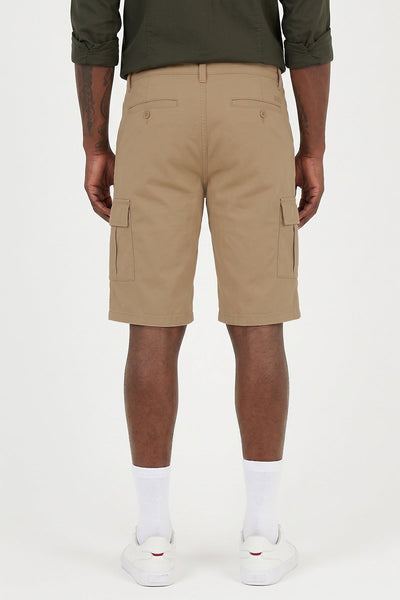
-%9None Denim Side Cargo Pocket Stretchy Fabric Men's Cargo Shorts Bermuda
₺ 999.00TL₺ 899.90TL
2. How is Single Jersey Knitted? — Technical Structure

Single jersey is produced on circular knitting machines using a single needle plate. Therefore, it is also referred to as "single plate" or "single".
The knit structure consists of three basic elements:
- Stitch: The basic loop unit formed by the yarn around the needle.
- Wale: Vertical columns of stitches stacked one above the other. Wale density determines the horizontal density of the fabric.
- Course: Horizontal rows of stitches arranged side by side. Course density determines the vertical density of the fabric.
Each stitch is formed by passing it through the stitch of the previous course. This chain-like structure makes the fabric both flexible and lightweight. However, if a stitch is dropped, a "ladder" can form and spread quickly — a known disadvantage of single jersey.
3. How to Distinguish the Front and Back of Single Jersey?

The two sides of single jersey fabric can be easily distinguished:
Front side: Smooth V-shaped stitches are visible. The surface is smooth and regular. The side facing outwards on garments is always this side.
Back side: Horizontal arc-shaped stitch backs (purl) are visible. It has a duller, slightly fluffy, and irregular appearance.
Practical tip: The edges of single jersey fabric always curl towards the front side. If you have a piece of single jersey, look at the side where the edge curls — that's the front side.
4. What is Ringel Single Jersey?

Ringel is the striped version of single jersey fabric. By feeding multiple colored yarns into the machine simultaneously, each course is knitted in a different color. This creates horizontal colored stripes.
The word "Ringel" is of German origin and means "ring, circle" — used in reference to the ring-shaped structure of the stitches. This term has been directly adopted in the Turkish textile industry.
Ringel single jersey is frequently preferred for t-shirts, children's clothing, and sportswear. Stripe width and color combinations can be freely changed with machine settings.
5. Can Colors Be Made Without Ringel?
Can Horizontally Striped Single Jersey Be Made Without a Ringel Attachment?
Yes, it can; however, there are significant differences in terms of design flexibility and repeat width. The fundamental element determining the difference is the yarn feeding system.
1. Ringel (Striped) Knitting Method
Ringel machines have yarn changing devices at each feeding unit (feeder). These devices allow programming which color will be knitted in each course independently.
-
Flexibility: Since yarns can be cut and held, red can be knitted in one course, and blue in the next.
-
Repeat Size: Theoretically, the repeat length is unlimited. Very wide blocks or very thin stripes can be freely combined in the same fabric.
2. Standard (Plain) Knitting Method (Dizme Ringel)
Horizontal stripes can also be achieved on machines without a ringel attachment, but this is called "dizme ringel" (stacked ringel). Here, a fixed color is assigned to each feeder.
-
Restriction: The repeat size is limited by the total number of feeders (systems) on the machine. For example, on a machine with 96 feeders, a pattern of at most 96 courses can be created, and this pattern must repeat itself in every rotation.
-
Difficulty: To change the stripe thickness, the yarns in the machine must be physically repositioned, which is operationally cumbersome.
3. Printing Method
After the fabric is knitted, a stripe pattern can also be applied by printing dye onto it. However, this is not a knitting technique, but a finishing process.
🔍 Fabric Analysis: How to Distinguish?
To understand which method was used to make the fabric you have, the most reliable way is to look at the back of the fabric:
| Method | Back Side Appearance |
| Ringel / Dizme |
|
| Printing |
Since the color only penetrates the surface of the fabric, the back side remains faded, dull, or white. 🎨 |
6. What is Lycra Single Jersey?
Lycra single jersey is a type of single jersey produced by adding elastane (lycra/spandex) yarn alongside cotton or synthetic yarn during knitting.
Its differences compared to standard single jersey are:
- Much higher elasticity and recovery properties
- Better fit to the body
- Retains its shape after washing
- Slightly heavier weight (elastane yarn adds extra weight)
Lycra content typically ranges from 3% to 10%. 5% Lycra is sufficient for everyday wear, while 8-10% Lycra is preferred for sports and activewear.
Lycra single jersey is widely used in the production of leggings, bodysuits, sports t-shirts, and underwear.
7. How Many Grams is Single Jersey? — Weight Guide
The weight of single jersey fabric is measured in grams per square meter (g/m²). Weight varies depending on yarn count, Lycra content, and machine settings.
| Weight | Area of Use |
|---|---|
| 100–130 g/m² | Very thin, summer t-shirts, underwear |
| 140–160 g/m² | Standard t-shirts, summer wear |
| 160–180 g/m² | Medium weight, 4-season t-shirts |
| 180–200 g/m² | Thick t-shirts, long-sleeved |
| 200–220 g/m² | Heavy weight, sweatshirt base |
| Above 220 g/m² | Special production, rare — practical upper limit for single jersey |
Although grammage above 220–240 g/m² is technically possible for single jersey, at this point, the fabric properties begin to change, and it becomes more efficient to switch to a different knit structure (such as interlock).
8. What is Yarn Count? The Difference Between 24/1, 24/2, 30/1
Yarn count indicates the fineness of the yarn. The Ne (English Cotton Count) system is widely used in the textile industry in Turkey and worldwide.
Basic rule: As the count increases, the yarn becomes finer. This is a counter-intuitive rule but one that is not forgotten once learned.
- 20 Ne: Thick yarn → heavy weight
- 24 Ne: Medium yarn → standard weight
- 30 Ne: Fine yarn → light weight
- 40 Ne: Very fine yarn → very light weight
So what do 24/1 and 24/2 mean?
The /1 or /2 next to the number indicates the number of plies (twists):
- 24/1: Single-ply yarn. Lighter, more economical.
- 24/2: Double-ply (twisted) yarn. More durable, smoother surface, heavier.
| Yarn | Estimated Weight |
|---|---|
| 30/1 | 120–150 g/m² |
| 24/1 | 150–180 g/m² |
| 20/1 | 180–220 g/m² |
Note: Weight also depends on machine gauge and stitch length; these values are general guidelines.
📌 For more information on yarn numbering systems
Yarn Count Calculation & Conversion
check out our article.
9. Does Single Jersey Have to Be Cotton?
No, it does not necessarily have to be cotton. Single jersey is a knitting structure, not a raw material. It can also be produced with different types of yarn:
- Polyester single jersey: Common in sportswear. Good moisture management, quick-drying, economical.
- Viscose (modal) single jersey: Silky feel, drapey structure. Preferred for summer wear.
- Bamboo single jersey: Antibacterial, soft, breathable. Popular in baby clothing.
- Polyester-cotton blend: Balance of durability and comfort. A frequently used combination.
However, in the market, when "single jersey" is mentioned, it usually refers to a cotton or cotton-dominant fabric. This is because cotton is highly compatible with this knitting structure and due to consumer preference.
10. Advantages and Disadvantages of Cotton Single Jersey
Advantages:
- Comfortable against the skin due to its breathable structure
- Absorbs sweat and moisture with its hygroscopic property
- Does not generate static electricity
- Low risk of allergic reactions
- As a natural raw material, it is suitable for environmentally friendly production processes
- Can be washed at high temperatures (especially important for baby products)
Disadvantages:
- More expensive compared to synthetics
- Risk of shrinkage during washing (especially in untreated fabrics)
- Wrinkles easily
- Becomes heavy when wet and dries slowly
- Pilling may occur with prolonged use
11. Why Are Cotton Leggings Not Produced Much?
Very few sources answer this question — yet the answer is quite technical and interesting.
For leggings to be functional, the fabric must provide four-way stretch and remain close to the body. Cotton is inherently not elastic. To gain elasticity, a high percentage of Lycra must be added — which increases cost and partially suppresses cotton's natural properties.
On the other hand, polyester and elastane blend fabrics:
- Provide much higher elasticity
- Fit the body and retain their shape
- Are suitable for sports activities in terms of moisture management
- Are produced more economically
Cotton leggings are produced — but they usually contain 20–30% elastane, and this proportion reduces the "natural" feel of cotton. Full cotton leggings are very rare because it is technically difficult and impractical to provide sufficient elasticity.
12. Is Single Jersey for Summer or Winter?
Single jersey is primarily a summer and 4-season fabric — but its use varies depending on its weight:
- 140–160 g/m²: Distinctly summer. Thin, cool, breathable.
- 160–180 g/m²: 4-season. Ideal for spring-autumn, can also be worn in summer.
- 180–220 g/m²: Approaches winter. Used in long-sleeved, layered clothing.
Pure single jersey is not a winter fabric. For winter clothing, thicker and heat-retaining fabrics such as 3-thread (brushed) or fleece are generally preferred.
13. Is Single Jersey Healthy?
For cotton single jersey, the answer is largely yes:
- Its breathable structure reduces skin irritation
- Its moisture-absorbing property balances perspiration
- When it contains no synthetics, the risk of allergic reactions is minimal
- Safely used in baby clothes
However, it should be noted that the healthiness of a fabric depends not only on the raw material but also on the dyeing and finishing processes. OEKO-TEX® certified fabrics guarantee that they do not contain harmful chemicals.
Polyester-blend single jerseys, on the other hand, lag behind cotton ones in terms of breathability; prolonged use can lead to skin irritation.
14. How to Wash Single Jersey? Does it Shrink?
Single jersey fabric can shrink during washing — especially during the first wash and with untreated (non-pre-shrunk) fabrics, this risk is higher.
Washing recommendations:
- Wash at 30°C or 40°C
- Wash inside out (to protect color and surface)
- Choose the delicate or cotton program of the washing machine
- Keep the spin cycle low
- Do not tumble dry — it causes sagging and shrinkage
- Dry flat or hang to dry
How much does it shrink?
Untreated cotton single jersey can shrink by 3–8% in length during the first wash. For this reason, garment manufacturers wash the fabric or apply a steam relaxation process before cutting.
15. What is Pre-shrunk (Washed) Single Jersey?
Pre-shrunk single jersey is fabric that has been subjected to a shrinking process before reaching garment manufacturing. This process is carried out under controlled conditions in the factory:
- The fabric is wetted, steamed, or run through a washing machine
- The natural shrinkage allowance is taken in advance
- The fabric is delivered in a stabilized state
Advantage: When the finished product is washed by the consumer, dimensional change is minimal. It is particularly preferred for baby clothing, underwear, and delicate products.
Disadvantage: The cost is slightly higher and the fabric may feel less flexible.
If you see "pre-washed", "sanforized" or "pre-shrunk" on labels, you are dealing with a fabric that has undergone this process.
16. Is Single Jersey Suitable for Underwear?
>Yes, single jersey is widely used in underwear production — especially for:
- Men's undershirts and boxers: Thin weight (140–160 g/m²) cotton single jersey is ideal.
- Women's underwear: Lycra single jersey is preferred; it provides flexibility and a close fit.
- Baby innerwear: Cotton, OEKO-TEX certified single jersey is the safest option.
It is recommended that single jersey used for underwear be processed with skin-friendly dyes, be formaldehyde-free, and preferably organically certified.
17. Is Single Jersey Fabric High Quality?
>The answer to the question "Is it high quality?" depends on its intended use.
Single jersey is an excellent fabric in its category — but it may not be the right choice for every job.
Factors determining quality:
- Yarn quality: Combed cotton is smoother and more durable than carded cotton.
- Weight: Choosing the appropriate weight for the intended use is critical.
- Finishing processes: Processes such as mercerization and sanforization improve fabric quality.
- Lycra content: The right amount of Lycra adds flexibility and durability.
The difference between cheap single jersey and quality single jersey is noticeably felt in its hand-feel, washing durability, and resistance to pilling.
18. Is Single Jersey Suitable for T-Shirts?
>Single jersey is the most common fabric for t-shirt production — and there are very good reasons for this:
- Its lightweight and breathable structure is suitable for daily wear.
- Its smooth front surface is ideal for printing and embroidery.
- Its wide range of weights caters to different quality segments.
- It is easy and economical to produce.
Recommended weight for t-shirts: 160–180 g/m² is the most common preference. Very thin (under 140) t-shirts may appear transparent; very thick (over 200) may feel heavy and hot.
Combed cotton single jersey is the gold standard for t-shirts: smooth surface, less pilling, long lifespan.
